Overview of Juhu Juggernauts
TheJuhu Juggernautsrepresents one of India's most sophisticated traditional strategy games, with origins tracing back over two millennia. This intellectual pursuit combines elements of warfare simulation, mathematical precision, and philosophical depth in a way that has captivated players for generations.
Quick Facts:The game is traditionally played on an elaborately carved wooden board with distinctive pieces representing various elements of ancient Indian military formations. Unlike Western chess,Juhu Juggernautsincorporates circular movement patterns and strategic concepts derived from Vedic mathematics.
What setsJuhu Juggernautsapart from other strategy games is its unique integration of spiritual concepts with tactical gameplay. Each move carries not only strategic weight but also symbolic meaning, reflecting the interconnectedness of all things—a core principle in Indian philosophy.
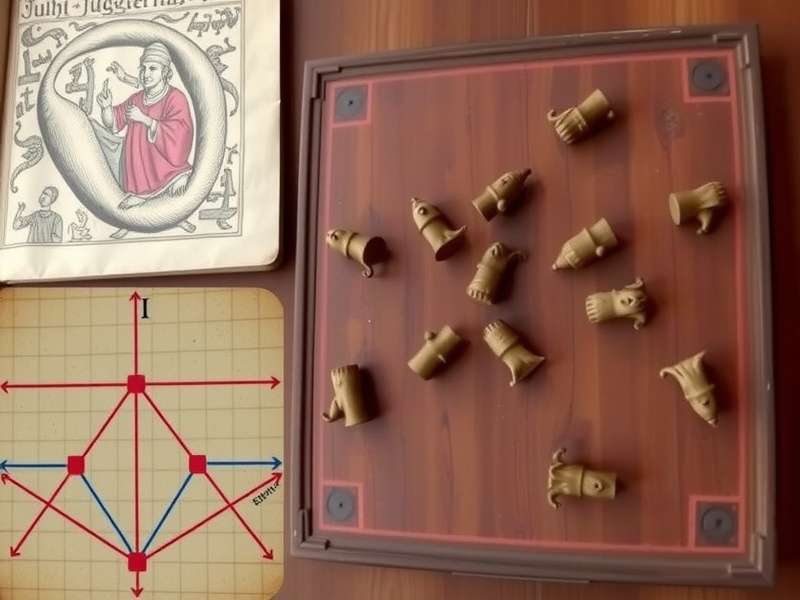
The name "Juhu Juggernauts" itself carries significant meaning. "Juhu" references the coastal region where the game was believed to have been perfected, while "Juggernauts" evokes the unstoppable force represented by certain powerful pieces within the game. Together, they describe a gameplay experience of both geographical specificity and overwhelming strategic momentum.
Historical Origins and Development
The earliest references to games resemblingJuhu Juggernautsappear in Sanskrit texts dating to approximately 300 BCE. These texts describe "chaturanga" and other proto-chess games that would eventually evolve into the distinct form we recognize today asJuhu Juggernauts.
Historical Timeline
300 BCE:First textual references to precursor games
200-400 CE:Development of distinctive circular board design
600-800 CE:Codification of standard rules during Gupta Empire
1200-1400 CE:Spread throughout Southeast Asia via trade routes
1800s:British colonial documentation of the game
1950s:Modern competitive tournaments established
Regional Variations
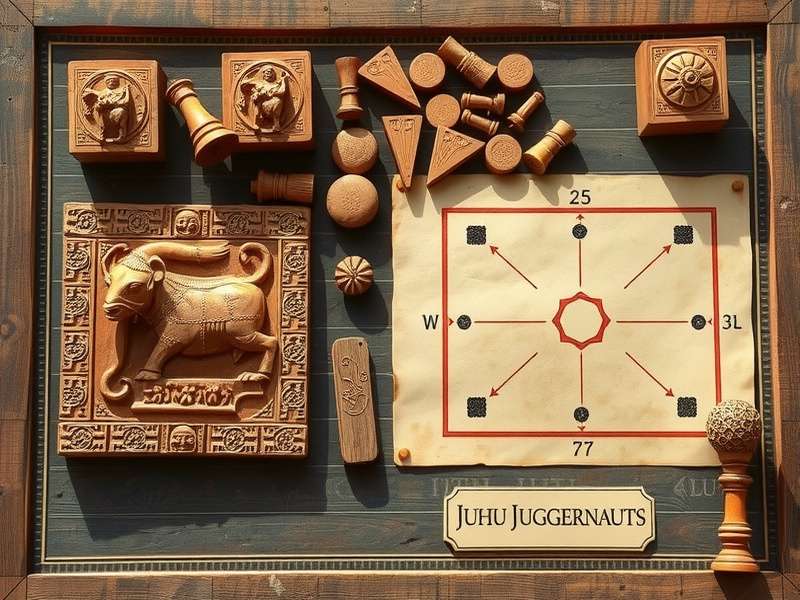
AsJuhu Juggernautsspread across the Indian subcontinent, regional variations emerged. The Northern version emphasized aggressive opening strategies, while Southern styles favored defensive, long-game approaches. The coastal variations from the Juhu region incorporated maritime trading concepts into gameplay, eventually becoming the standardized version played today.
The game experienced a renaissance during India's independence movement, when it was promoted as a symbol of indigenous intellectual achievement. Nationalists organizedJuhu Juggernautstournaments as cultural events that celebrated Indian heritage while subtly resisting colonial cultural domination.
Modern Revival
In recent decades, there has been a concerted effort to preserve and promoteJuhu Juggernautsas an important cultural artifact. Schools in Maharashtra and Gujarat have introduced the game as part of their mathematics and strategy curriculum, recognizing its cognitive benefits.
The digital age has brought new opportunities forJuhu Juggernautsto reach global audiences. Mobile applications and online platforms now allow players worldwide to experience this traditional Indian game, while artificial intelligence researchers study its complex decision trees for insights into machine learning.
Game Rules and Mechanics
The official rules ofJuhu Juggernautshave been refined over centuries, creating a balanced yet deeply complex gameplay experience. Understanding these rules is essential to appreciating the strategic depth that has made this game endure for so long.
Board Setup and Components
The traditionalJuhu Juggernautsboard features a circular design with concentric rings divided into 64 segments—a number with significance in Vedic mathematics. The board is divided into four colored quadrants representing the classical elements: earth, water, fire, and air.
Game Pieces:Each player commands 16 pieces representing different aspects of ancient Indian society: Raja (King), Mantri (Minister), Gaja (Elephant), Ashva (Horse), Ratha (Chariot), and Padati (Foot Soldiers). Each piece moves according to specific patterns that reflect their real-world counterparts' capabilities.
Movement Rules
The circular nature of theJuhu Juggernautsboard creates unique movement patterns not found in rectangular board games. Pieces can move radially (toward or away from the center), circumferentially (around the rings), or in spiral patterns that combine both directions.
Unlike Western chess where pieces generally move in straight lines,Juhu Juggernautsincorporates curved movement patterns that more accurately reflect natural motion. This creates a fluid, dynamic gameplay experience that many players describe as more "organic" than other strategy games.
Special Moves and Capturing
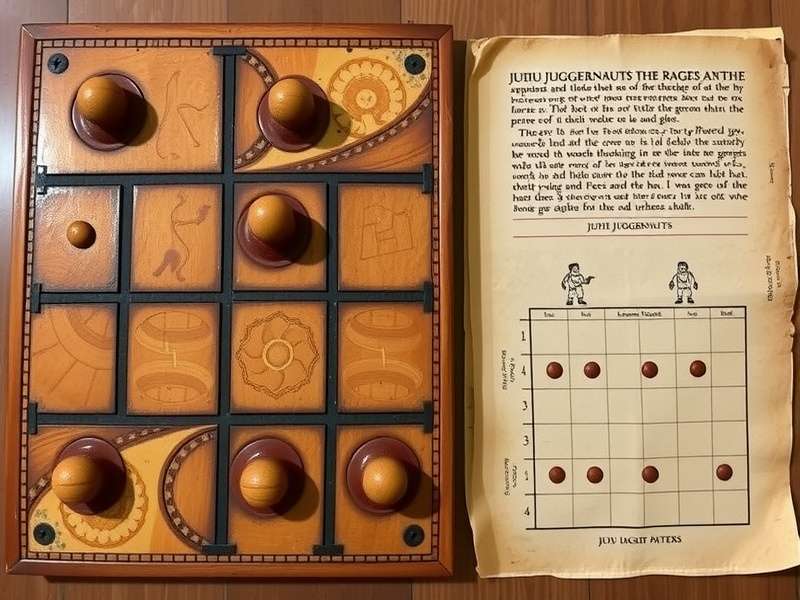
The game features several unique capturing mechanics. The "Dharma Capture" allows a player to spare an opponent's piece under certain conditions, reflecting the principle of non-violence. The "Moksha Move" enables a player to sacrifice their own piece to achieve positional advantage, symbolizing spiritual liberation.
Cultural Note
The rules ofJuhu Juggernautsare deeply intertwined with Hindu philosophical concepts. The circular board represents samsara (the cycle of rebirth), while the game's objective—achieving enlightenment for one's Raja—parallels spiritual goals in Indian traditions.
Victory inJuhu Juggernautscan be achieved through several methods, not just checkmate. A player can win by achieving "Dharma Alignment" (positioning pieces in spiritually significant formations), "Economic Dominance" (controlling key resource sectors of the board), or the traditional "Raja Capture" (similar to checkmate in chess).
Advanced Strategy and Tactics
MasteringJuhu Juggernautsrequires understanding both immediate tactical opportunities and long-term strategic frameworks. The game's circular geometry and multiple victory conditions create a rich strategic landscape that rewards creative thinking and adaptability.
Opening Principles
Successful openings inJuhu Juggernautsbalance control of the board's center rings with development of pieces into active positions. Unlike chess where control of the center is paramount,Juhu Juggernautsrequires players to consider both radial and circumferential control simultaneously.
Classical Openings:The "Monsoon Approach" focuses on fluid, adaptable positioning; the "Himalayan Defense" creates an impenetrable formation; and the "Ganges Flow" emphasizes gradual positional advantage through controlled expansion.
Middle Game Strategies
The middle game ofJuhu Juggernautsis where the battle for board control intensifies. Players must constantly evaluate whether to pursue traditional victory through Raja capture or alternative victory conditions that might be developing.
Advanced players ofJuhu Juggernautslearn to recognize "Karma Patterns"—specific piece arrangements that create cascading advantages. These patterns often involve sacrifices that yield positional benefits several moves later, reflecting the philosophical concept of actions bearing future consequences.
Endgame Techniques
The endgame inJuhu Juggernautsrequires precise calculation and understanding of piece coordination. With fewer pieces on the board, the circular geometry creates unique mating patterns not found in other games.
Expert players recognize that the endgame is not just about checkmating the opponent's Raja but about achieving spiritual harmony on the board. The most elegant victories inJuhu Juggernautsoften involve achieving Dharma Alignment while simultaneously threatening the opponent's king.
Tournament Play
ModernJuhu Juggernautstournaments follow standardized rules established by the International Juhu Juggernauts Federation (IJJF). Championship matches are often timed events with classical time controls, though rapid and blitz variants have gained popularity in recent years.
Cultural Significance and Legacy
The impact ofJuhu Juggernautsextends far beyond the game board, influencing Indian art, literature, and philosophical thought for centuries. Its enduring popularity speaks to its deep roots in Indian culture and its ability to adapt to changing times while preserving traditional values.
Influence on Indian Arts
The distinctive circular board and pieces ofJuhu Juggernautshave inspired generations of Indian artists. Mughal miniature paintings often depicted royalty playing the game, while contemporary Indian artists continue to reference its visual and conceptual elements in their work.
In literature,Juhu Juggernautsfrequently appears as a metaphor for strategic thinking, fate, and the interplay between individual action and cosmic order. From ancient Sanskrit dramas to modern Hindi novels, the game serves as a powerful symbolic device.
Architectural Influence
The circular patterns and strategic concepts ofJuhu Juggernautscan be seen in Indian temple architecture, particularly in the design of mandalas and the layout of some historical fortifications. The game's balance between symmetry and dynamic movement echoes principles found in traditional Indian design.
Educational Applications
Modern educators have recognized the cognitive benefits of teachingJuhu Juggernautsto students. The game develops critical thinking, pattern recognition, strategic planning, and mathematical reasoning in ways that complement formal education.
Several studies have shown that children who learnJuhu Juggernautsdemonstrate improved performance in mathematics and spatial reasoning. The game's multiple victory conditions encourage flexible thinking and consideration of alternative solutions to problems.
Global Reach and Future Prospects
WhileJuhu Juggernautsremains most popular in India, its international presence has grown steadily. Expatriate communities have introduced the game to countries around the world, while cultural exchange programs increasingly include it as an example of India's intellectual heritage.
The digital transformation ofJuhu Juggernautspresents both challenges and opportunities. While some traditionalists worry about losing the tactile experience of wooden pieces on a carved board, others see technology as a way to preserve and spread knowledge of the game to new generations.
Preservation Efforts:Organizations like the Indian Traditional Games Society work to document regional variations ofJuhu Juggernautsand promote its inclusion in school curricula. Annual tournaments held in Mumbai attract competitors from across India and increasingly from international locations.
As we look to the future,Juhu Juggernautsstands as a testament to India's rich cultural heritage and intellectual traditions. Its continued evolution while maintaining core principles mirrors India's own journey—honoring the past while embracing the future.